Grieving a living person
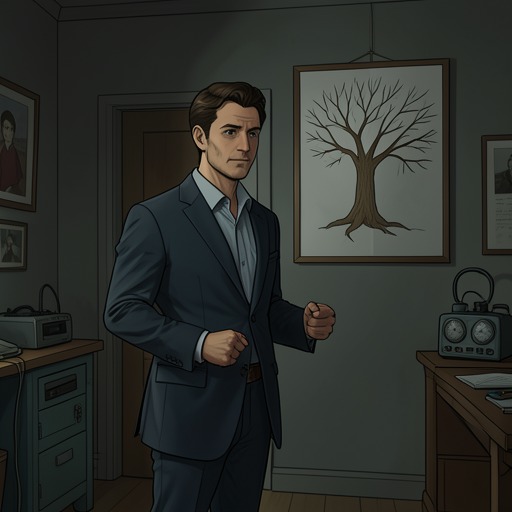
Beautiful Boy: A Father's Journey Through His Son's AddictionGrieving a living person is the paradoxical mourning David Sheff experiences while Nic Sheff is still alive: during drug use, his son seems present only as a shell, and the person David loves feels lost. The grief is not confined to a feared future death. It has already begun, returning in waves as David confronts Nic’s absence, while love and the possibility of recovery keep interrupting despair. The concept names an ongoing loss without treating Nic as dead or reducing him to his addiction.
A loss that has already begun
David’s recognition is stark: he had feared losing Nic, but now feels that he has lost him. When Nic is on drugs, David says, he does not have Nic as he knows him. The distinction is between physical survival and relational presence: Nic remains alive, yet the son David longs for seems inaccessible. The book presents this as David’s painful perception, not as proof that Nic’s self has vanished.
The possibility of overdose or an accident had once allowed David to imagine a future bereavement. Now he understands that he has already been grieving the part of Nic that drugs have taken from their relationship. He still fears that Nic may die, and imagines death leaving a lasting crack in his soul. But he also recognizes that he would continue living if Nic died—or if Nic remained high—while carrying that grief. The realization does not make the danger less serious; it changes the temporal shape of the loss. Mourning is no longer only something David expects to face later.
David recognizes the experience through Joan Didion’s account in The Year of Magical Thinking, where grief comes in waves that can weaken the knees, blind the eyes, and interrupt ordinary life. The reference gives a name to sensations David had not fully understood. Its importance is not that it resolves his situation, but that recognition briefly makes the grief legible: what had felt overwhelming and bewildering can be understood as mourning.
The absent child in the room
The book gives this absence a physical and literary shape through lines from Shakespeare read beside a bed. The poem describes grief filling the room of an absent child, moving through the house, repeating his words, and giving form to vacant garments. These images make absence active: the lost person is not there, yet memory seems to occupy the rooms and routines around the family. The borrowed poem becomes a language for a loss that has no finality or funeral.
A small act by Jasper Sheff gives that absence a different, tender form. Jasper writes to Nic, “Nic, B smart. Love, Jasper.” He sends the message although Nic’s cell phone has been shut down, holding open the possibility that Nic might turn it back on. The note is both an expression of attachment and a gesture addressed to someone who cannot presently be reached. Its hope is modest, but it matters precisely because the connection has not been abandoned.
Grief interrupted by hope
David describes the family’s experience as grief interrupted by hope, hope interrupted by grief, and both interrupted by a new crisis. The sequence resists a clean progression from loss to acceptance. A moment of hope cannot cancel what has already happened; a relapse or crisis does not necessarily extinguish every possibility of change. David’s understanding has expanded enough to hold the contradiction that relapse can occur within recovery, rather than proving recovery impossible.
That enlarged capacity for contradiction also shapes David’s response to Nic. He rages against the addiction and the pain it brings to Nic and the family, while remaining filled with love for his son and gratitude for what Nic has brought into their lives. He is angry at a God he says he does not believe in, yet prays and gives thanks. These responses coexist rather than neatly replacing one another. Grief here is not a single, settled emotion but a condition in which anger, fear, love, and hope recur together.
Preserving Nic beyond the addiction
In search of meaning, David describes Nic on drugs as a ghost or apparition, with the loved son dormant and hidden in an inaccessible corner of consciousness. This is David’s way of distinguishing Nic from the effects of addiction, not a clinical account of what happens to Nic. He holds to the belief that Nic’s essence remains whole and protected, even while admitting that the drug may win the battle for Nic’s body and that Nic may never re-emerge as he was. His hope is therefore not certainty about recovery; it is a refusal to let the addiction define the entirety of his son.
That refusal underlies David’s insistence that he will continue to love Nic and will not let a drug take the part of him that remains beyond its reach. The book places this conviction beside the practical uncertainty of relapse: Richard Rawson has explained that repeated attempts at sobriety may precede lasting change, and a rehabilitation lecturer reports that more than half of those entering rehab are sober ten years later, even if they have moved in and out of sobriety. David does not treat these possibilities as guarantees. Nic is alive, and there is a chance; for a father already grieving his living son, that chance sustains hope without erasing the loss.